In a Fallow Time, I Give Thanks
 Here we are at the start of Thanksgiving week. I’ve much to be thankful for, and I’ve got much to wish had never been mine to own. Such is life—the peaks and the valleys. It’s the same with writing. We can hit a stretch when all is going well, and we can just as easily fall into a fallow period.
The word, “fallow,” as applied to agriculture, refers to ground that’s left uncultivated to restore its fertility. In writing, we often have fallow times when we don’t work, either by choice or by necessity. I’m in one of those periods now. Real world events require my attention. The novel I’m working on waits for my return. I’m thankful I’m able to spend my energy elsewhere. I’m grateful I’m able to fulfill other people’s needs.
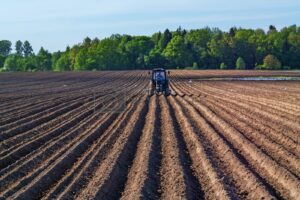
The word, “fallow,” also reminds me of the vocabulary of farming, a language my father knew well. I learned from him “windrows,” “bushels per acre,” and “dead furrows,” just to name a few. A dead furrow is a trench that goes unplowed in a field to help with drainage. When I was old enough to drive a tractor, my father let me disk the fields he’d plowed. Remembering how he plowed each field in “lands,” moving from one section to the next, and the way the clay soil furled back from the blades of his ploughshares, I think of this poem by Ted Kooser:
Tillage Marks
On this flat stone,
too heavy for one man alone
to pick up and carry
to the edge of his field,
are the faint white marks
of a plow, one plow
or many, the sharp blade
crisscrossing its face
like a lesson scratched there
in chalk, the same lesson
taught over and over,
to one man alone in his field
for fifty or sixty years,
or to fifty such men,
each alone, each plow striking
this stone, in this field
which he thought to be his.
Our work as writers is so often solitary—at least mine has been. How many hours have I spent alone in a room, just me and a computer screen, or back in the old days with a pen and a notebook. I’ve written my way to the right margin, and then I’ve turned to write another line. My father spent years alone on a tractor, turning after a pass through the field to make another. He and I turned out to be very different sorts of men, but still I’m thankful for all he taught me about what it takes to have passion for the work before me, in productive times and in fallow ones—that and the perseverance it takes to prepare the soil, to sow the seeds, to care for the plants, to harvest the crops you’ve done your best to grow.