Water, Ash, the Ticking of a Clock: Using Concrete Images
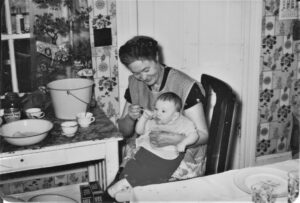 In 2003, I published a book, Turning Bones, as part of the American Lives series at Nebraska Press. The book was a hybrid of nonfiction and fiction. I took what I knew about the paternal side of my family and used the facts to imagine lives for ancestors I never knew. In one section of the book, “Fire Season,” I dramatize what I think may have happened in the aftermath of my great-great-grandmother’s death. My great-great-grandfather, John, finds himself tasked with caring for his daughter, Louisa. He writes his sister in Indiana, asking for help. She sends her daughters, Ursula and Matilda, to Illinois. At one point, Louisa, reaches out to touch a glowing ember on the fireplace hearth:
Louisa is at the fireplace raking out the ashes the way John has taught her. An ember pops and lies glowing on the hearth. John sees Louisa reach down with her fingers. He starts to shout, “No, don’t. It’s hot.” But before he can speak, Ursula has reached out and snared Louisa’s hand. She speaks to her in a kind, motherly tone. “Oh, honey. You don’t want to touch that coal. It’s hot as sin. You don’t want to burn yourself, honey. You come on over here and help me dry these dishes.”
John lets all the breath that’s gathered in him come out with a sigh. A few years later, he’ll remember this moment, and he’ll think this was the instant when so much began to change. Ursula took Louisa’s hand and saved her from fire, and so many things became possible because for the first time since Lizzie’s death there were women in the house. John knew—had known most of his grown life—it was women, good and decent and earnest, who had always taught men what it meant to have a family and a home. Without women, men were lost. They were the cold water slapped on the face come morning, the ticking of a clock when no one was in the room to hear it, the gray ash of a fire long burned cold.
 I offer this passage here on Mother’s Day in honor of my mother and my wonderful wife, Cathy, two women who have meant the world to me. My mother was my refuge during a tempestuous childhood. I loved her dearly. She never turned away from me, not even during my worst times. Cathy has made a lovely home for me on the other side of darkness and distress, and I like to think I’ve done the same for her. We’re truly partners through every moment of joy as well as every challenge. Without her, and without my mother, I would have been lost a long time ago. They each taught me what it was to love and to receive love in return.
In the passage I share from Turning Bones, I try to capture what it feels like to have the love of good women by describing in concrete terms what it feels like when that’s not the case—the cold water slapped on the face, the ticking of a clock in an empty room, the ash of a fire burned cold. If you’d like to try doing the same in a writing activity, take something you’ve written in abstract language—maybe direct statements about some sort of emotional state—and express the feelings with concrete images. Direct statements transmit information. Concrete images do the same but with deeper emotional connections. In the above passage, I do both. I state, “Without women, men were lost.” Then I go on to make the sentiment concrete. If I’ve succeeded, I’ve expressed the feeling of being lost through the concrete details—the cold water, the ticking of the clock, the gray ash.
I share this with anyone who may be looking at a passage that seems factually accurate but lacks the sort of emotional resonance the right concrete images can lend.
Lovely.
Thank you, Julie.