Make Yourself Squirm: Writing That Matters
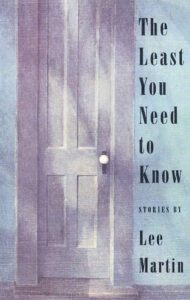 Somewhere in the early nineties, I wrote a story called “The Least You Need to Know” that would become the title story of my first collection. The story is told from the point of view of a fifteen-year-old boy whose father cleans up crime scenes. At the end of the story, the narrator’s mother says to him, “Don’t be afraid of your life, Telly. You’ll disappoint yourself with the things you’ll do, but be patient. After a while, you’ll swear it was someone else who did those things. Not you.” She’s talking about her brief flirtation with a man named Leon Silver, a man the narrator’s father demeans when he comes home and finds Mr. Silver paying a visit: “I imagine you’re the kind most people avoid. I don’t know how my wife hooked up with you.” Telly, though, has his own secret. Prior to a classmate’s suicide, he rejected a note she laid on his desk. His mother’s words—words I can imagine my own mother saying—apply to the guilt he feels over his own actions.
This is one of the first stories I wrote that cost me something to tell. I remember reaching a resolution to the narrative thread of Leon Silver and the narrator’s mother. At the climactic moment of the confrontation scene between Mr. Silver and the narrator’s father, Mr. Silver says, “You should know something.” The narrator’s father stops him. He presses his open hand into the air between them. The narrator says, “I sensed, event then, that a decision was about to be made, but that no one had the courage to make it. It would be years before I would understand that it had something to do with the violence we can do to love, and the will it takes to mend it.” The narrator, then, tells Mr. Silver he should leave, which he does.
I could have easily ended the story there, but something told me I hadn’t gone as far as I could into the aspects of the story that mattered the most to me. I heard my narrator say, “But that’s not the story I need to tell—at least, not all of it.” Then he tells the story of the girl, the note, the suicide. It made me squirm in my chair to continue the story, going more deeply into what made me uncomfortable, and that’s when I knew I had a story that might matter to readers. My words weren’t only the words of my narrator; they were mine as well. I never would have gotten to that point had I settled for the easy resolution.
So I ask you, what are you holding back in your writing? What’s difficult for you to put into words? What makes you squirm? Try writing a sentence or two that’s as close to the bone as you can get? See how it makes your work matter in ways it might not have in the past. Tell it all. Don’t be afraid of your life.